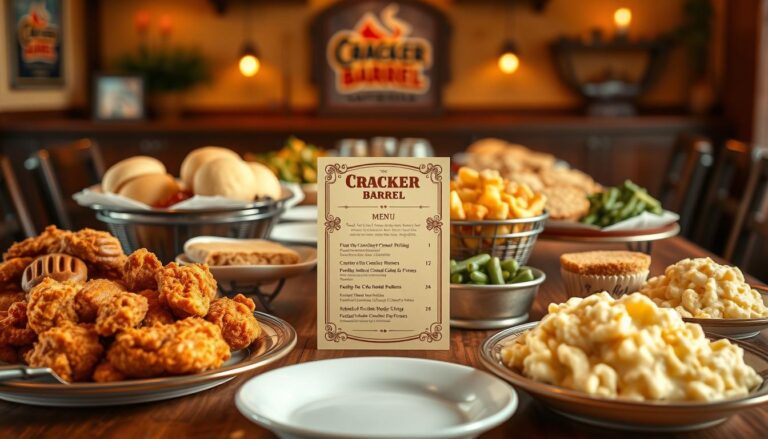
Cracker Barrel Allergen Menu
Surprising fact: almost one in three diners say they check ingredient details before ordering at a roadside restaurant. That simple habit matters when shared grills, fryers, and prep stations can raise cross-contact risk.
This introduction gives you a clear, practical overview so you can decide before you sit down. You’ll learn what the X and Y marks mean on the online chart, how the company builds its information from supplier statements, and why staff can only reduce — not eliminate — cross-contact risks.
We point out safer patterns like plain grilled chicken, New York strip steak, simple sides such as fruit or a plain baked potato, and scrambled eggs for breakfast. We also flag higher-risk items: fried chicken, pancakes, biscuits, gravies, and casseroles.
Read on to see how to use the Nutrition & Allergen Guide to filter menu items, talk with staff, and plan meals that limit wheat and gluten exposure for guests with celiac disease or multiple sensitivities.
Understanding Cracker Barrel’s Allergen Policy and Present-Day Practices
Before you order, it helps to know how ingredient lists are compiled and why they change. The restaurant builds its online information from supplier ingredient statements. When a vendor tweaks a recipe, the listed ingredients update to match.
Because kitchen areas are shared, no dish can be guaranteed free of allergens. Shared fryers, grills, and finishing fats like butter can create risk cross-contact even for simple breakfast eggs or a plain steak.
If you have celiac disease or a severe wheat or gluten reaction, speak with a manager before ordering. Corporate guest support can confirm current prep methods and substitutions.
- Supplier statements drive ingredient accuracy and change over time.
- Shared surfaces and fryer oil prevent a 100% allergen-free claim.
- Call ahead or ask guest support for prep details and safe options.
- Use the X vs. Y flags to tell “contains” from higher cross-contact risk.
What staff can do for you
Be short and specific when you tell staff your needs. Ask for clean utensils, no-butter finishes, and confirmation on gravies, pancakes, or potatoes—these often contain milk or wheat.
How to Read the Allergen Chart: X vs. Y Indicators Explained
Learn how the chart’s X and Y markers help you spot clear ingredients and higher-risk prep at a glance.
“X” contains allergen vs. “Y” higher cross-contact risk
X marks mean the recipe includes that allergen. Y flags mean the dish may face higher cross-contact from shared grills, spatulas, or fryers.
“X shows an ingredient is present. Y warns that preparation or shared equipment raises risk.”
Common flags on fried and grilled menu items
Fried entries often show Y for multiple allergens because of shared oil and breading. Fried chicken, pancakes, biscuits, gravies, and casseroles frequently get X for wheat, milk, or egg.
Grilled proteins like grilled chicken or steak can carry a Y when the flat top or tools touch dairy- or wheat-containing foods. Treat a Y as a prompt to ask about cleaned pans, fresh utensils, or separate prep.
| Marker | Meaning | Examples | What to ask |
|---|---|---|---|
| X | Ingredient included | Pancakes, gravy, biscuits | Request alternative or skip |
| Y | Elevated cross-contact risk | Fried chicken, grilled steak | Ask about clean tools |
| May contain | Trace/trace statement | Some desserts, packaged sides | Confirm supplier info |
Limitations of the chart and location variations
The chart guides choices, but supplier changes, regional recipes, and seasonal items can shift markings. Always verify butter finishes, gravies, and seasonings before ordering.
- Scan X vs Y to shortlist safer items quickly.
- Use Y as a conversation starter with the kitchen.
- Verify the most sensitive ingredients like wheat and milk when in doubt.
Cross-Contact Hotspots: Shared Fryers, Grills, and Prep Areas
A single fryer or spatula can move wheat, milk, or egg proteins between dishes. That creates cross-contact you might not expect from a “plain” order.
Shared fryer oil and breaded proteins
Pooled oil transfers tiny bits of batter and crumbs. Fries, fried okra, and catfish pick up traces from breaded items fast.
Even if your order has no wheat, fryer use raises risk cross-contact. Ask if fried items share oil when you see Y or similar flags on the menu.
Grill tools, flat tops, and buttered finishes
Grill spatulas and flat tops move residue across proteins during service. A flat top finished with butter can add unexpected dairy to steaks or vegetables.
Prep stations add more risks. Shared cutting boards, tongs, garnish bins, and ladles all cause quick cross-contact during busy shifts.
| Hotspot | Common sources | Typical high-risk items | How it spreads |
|---|---|---|---|
| Fryer | Breaded chicken, batter | Fries, catfish, okra | Pooled oil transfers crumbs and proteins |
| Grill / Flat top | Spatulas, butter finishes | Steaks, grilled chicken | Tool contact and finishing fats |
| Prep area | Cutting boards, tongs, ladles | Salads, sides, gravies | Shared utensils move traces |
When you order at cracker barrel, ask staff for pan-cooked items on a clean surface. Request fresh gloves and separate utensils. Say “no butter” on steaks or grilled chicken if dairy is a concern.
Cracker Barrel Allergen Menu Overview: Using Official Tools
Use the interactive guide on the website to filter menu items by specific allergens and diets. Start with a quick site visit so you can see up-to-date information before you order.
Finding the Nutrition & Allergen Guide widget
Open the restaurant’s Nutrition & Allergen page from the main site footer or the help section. The widget sits near nutrition charts and displays the same information used by staff.
Filtering by allergens and dietary types
The tool filters for Wheat, Egg, Milk, Soy, Fish, Shellfish, Peanut, Tree Nuts, and Sesame. You can also select Vegetarian or Vegan to narrow options.
| Filter | What it shows | Why it helps |
|---|---|---|
| Allergens | Which items contain or risk traces | Quickly remove high-risk items like pancakes or fried choices |
| Diet | Vegetarian / Vegan | Limits results and highlights safe sides like fruit or potatoes |
| Item detail | Ingredients, calories, macros | Check for hidden gluten or dairy in dressings and gravies |
- Open an item page to review ingredients and nutrition.
- Use the Catering Allergen Guide for group orders.
- Recheck the guide before each visit—suppliers and recipes can change.
- Pair your shortlist with clear staff requests: “no butter” or “no gravy” and ask about house salad dressing.
Using the widget saves time and helps staff focus on a clear set of options. That lowers the chance of cross-contact and keeps your breakfast or dinner plans simpler and safer.
Safer Picks by Recipe: Grilled Proteins and Low-Risk Sides

Choosing plain grilled proteins narrows down surprises and keeps your plate straightforward. Start with items that are made simply and request no added finishes.
“Order plain and ask about prep — a small request can reduce hidden wheat or milk in your dish.”
Grilled Chicken Tenderloin and smoky southern grilled entries are good starting points. Ask for grilled chicken tenders or chicken tenders without bread, ranch, cheese, or butter. Confirm staff will use clean utensils and a fresh surface.
Pick a New York Strip steak plain. Request no butter or sauces so the steak stays a low-ingredient option. Lemon Pepper Trout is an option if fish fits your diet; check the pan or grill cleanliness first.
Grilled pork chops can work when cooked on a clean surface. Keep an eye on gravies and toppings that add wheat or milk unexpectedly.
Favor simple sides: fresh fruit, steamed broccoli, green beans, or a baked potato without butter or sour cream. These choices build a balanced plate with fewer hidden ingredients.
Remember that shared prep can still cause cross-contact. Always confirm cooking steps with staff and recheck the online menu items for the latest ingredient notes.
High-Risk Items to Avoid or Treat with Caution
Certain fried and baked dishes deserve extra caution if you avoid wheat or dairy. These classic comfort items often list X for wheat, milk, and egg. They also carry Y-level prep concerns because of shared oil and griddles.
Fried entrées and shared-fryer items
Breaded plates such as fried chicken, country fried steak, and fried catfish usually contain wheat, milk, and egg in the batter. They often show Y for shared oil, which raises cross-contact risk.
Baked goods, gravies, casseroles, and desserts
Biscuits and pancakes generally list wheat and milk. Gravies like Sawmill and Brown are thickened with wheat and may include milk. Hashbrown and broccoli-cheddar casseroles often hide both wheat and dairy.
- Desserts commonly include milk, egg, and wheat; some add nuts like pecans.
- Even simple sides can pick up traces when staff use the same utensils or plating areas.
- Expect “may contain” or Y flags in categories that use shared equipment.
- If you must reduce risk, swap to grilled chicken or a plain steak and choose steamed green beans, fruit, or a plain baked potato.
- Always ask for “no butter” and confirm dressings, sauces, and toppings before they’re added.
Dairy Notes: Butter, Gravies, and Hidden Milk Ingredients
Milk appears in many classic items at the restaurant. Biscuits, pancakes, mashed potatoes, and both Sawmill and Brown gravies often list milk in their ingredients. That can add dairy to your plate even when the entrée is plain.
Where milk shows up
Biscuits and pancakes commonly include milk or buttermilk. Mashed potatoes may contain milk or cream. Sawmill and Brown gravy recipes also often use milk or wheat as a thickener.
Real butter vs. dairy-free margarine
Some locations use real butter on flat tops and for finishing. Others stock dairy-free margarine. Ask staff which brand they use before assuming a substitute is safe.
Ordering language that helps
Use clear phrases like “no butter” and “no gravy” on steaks, chicken, and vegetables. Confirm mashed potatoes can come without dairy. Check sauces and dressings for hidden milk.
- Call out biscuits, pancakes, potatoes, and gravies as common dairy sources.
- Ask about butter on grills and finishing touches.
- Consider fresh fruit as a simple, dairy-light dessert option.
- Always ask staff to verify current prep and ingredients.
Gluten and Wheat Guidance for Celiac Disease and Sensitivities
A dish listed as wheat-free can still pick up gluten during busy service. Cracker Barrel separates wheat and gluten on its charts, but shared tools and fryers cause real risk cross-contact. Use the guide and staff answers together to be safer.
Wheat-free vs. gluten-free in shared environments
Wheat-free on paper means no wheat ingredient. Gluten-free requires careful prep to avoid traces. For people with celiac disease, a “may contain” or Y-style prep flag raises concern.
“Even gluten-friendly recipes can pick up traces from shared pans, spatulas, and oil.”
Gluten-friendly by recipe
Safer-by-recipe options include grilled chicken, trout, turkey sausage, steamed broccoli, and fresh fruit. Plain steak or potatoes can work when staff confirm no butter or gravy is added.
Best practices when ordering
- Ask for fresh gloves, clean utensils, and a wiped, separate prep area.
- Avoid Y-marked fryer items and foods that may contain batter like pancakes.
- Request proteins without breading, gravy, or butter finishes.
- Confirm fries, green beans, and potatoes don’t share oil or seasonings with wheat items.
- Keep requests short and polite so staff can focus on careful handling.
Egg Awareness: Where Eggs Appear and How to Order Smart
Many popular breakfast items use egg or egg-based mixes in ways you might not expect. Eggs show up in batters, baked goods, creamy dressings, and classic breakfast entrées.
Call out biscuits, pancakes, French toast, muffins, and some dressings as common egg carriers. Also watch for egg in casserole-type sides and certain gravies.
“Ask for eggs cooked to order on a clean pan with non-dairy fat to cut cross-contact risk.”
Baked goods, batters, dressings, and breakfast entrées
Choose items that are prepared fresh to reduce chance of cross-contact with wheat or gluten. If you see batter-heavy items on the griddle, consider asking for a separate pan.
Eggs cooked to order with non-dairy fat, clean pan requests
If you eat eggs, request scrambled eggs or another style cooked in a wiped pan with non-dairy fat. Ask staff for fresh utensils and a fresh surface before cooking.
Keep requests short and polite. Avoid griddle lines when pancakes or other batter items are being made.
| Where eggs appear | Risk note | What to request |
|---|---|---|
| Biscuits & muffins | Often contain egg and milk | Avoid or ask for ingredient details |
| Pancakes & French toast | Batter residue on griddle | Skip or request separate pan |
| Cooked-to-order eggs | Lower risk if pan is clean | Non-dairy fat, fresh utensils |
Breakfast Choices with Fewer Allergens

Morning orders can be simple and still comforting when you pick low-risk items. Start with plain proteins and clean prep requests. That reduces wheat and gluten exposure and cuts dairy surprises.
Smart picks to start your day
Choose scrambled eggs or egg whites and pair them with turkey sausage for a sturdy plate. Ask staff to cook eggs on a wiped pan with non-dairy fat.
Plain oatmeal can work if the kitchen confirms it’s made with water. Grits may include butter or milk—ask for them plain.
What to avoid
Skip pancakes, French toast, and buttered toast when you want lower wheat and dairy exposure. Biscuits and gravy often include both wheat and milk, so leave those off if you are sensitive.
| Item | Risk | What to ask | Alternate |
|---|---|---|---|
| Scrambled eggs / egg whites | Low (if pan is clean) | Use non-dairy fat, fresh utensils | Turkey sausage |
| Oatmeal | Medium (depends on prep) | Prepared with water, separate pot | Fresh fruit |
| Grits | Medium (often contains butter) | Request plain, no butter or milk | Steamed green beans |
| Pancakes / French toast | High (wheat, milk, egg) | Avoid or order off-griddle on clean pan | Plain potatoes or fruit |
- Build a simple plate: scrambled eggs and turkey sausage.
- Verify oatmeal prep and ask about grits before you order.
- Add fresh fruit or steamed sides like green beans or plain potatoes.
- Watch for gravy on breakfast platters and request no butter.
- Ask for separate utensils and a wiped surface if you’re highly sensitive.
Following these options helps you enjoy a warm, familiar breakfast without second-guessing ingredients. A short chat with staff makes it easier and safer.
Lunch and Dinner Ideas: Customizing for Fewer Allergens
A few small requests to the kitchen can make dinner both comforting and safer for sensitive diners. Pick straightforward recipes and ask staff to skip common finishes that add wheat or milk.
Order grilled chicken tenders plain and ask for fresh utensils. That keeps breading, ranch, and cheese off your plate and lowers cross-contact risk.
Try the smoky southern grilled chicken without bread, ranch, or cheese. The southern grilled style brings flavor without added batters when you ask for it plain.
Steak and pork made simple
Pick a New York strip steak or a grilled pork chop and request no butter or sauce. A dry finish reduces hidden gluten and dairy in gravies and sauces.
Build a safe vegetable plate
Combine steamed broccoli, green beans, and turnip greens for a sturdy side mix. Confirm the cook uses no butter, bacon grease, or dairy in the cooking fats.
- Ask for separate tongs and a clean area if you are very sensitive.
- Add fresh fruit for a touch of sweetness instead of desserts with wheat or milk.
- Watch for gravy, pancakes, or breaded sides that can drift onto your plate.
“Simple requests—no butter, no breading, and fresh utensils—help you enjoy homestyle dinners with fewer hidden ingredients.”
Side Dishes and Add-Ons: What to Favor and What to Skip
Small side swaps can keep a familiar plate safer for sensitive diners. Choose items that are simple and easy to verify. This helps you limit wheat and gluten exposure and cuts hidden milk or egg surprises.
Go-to picks
Keep it simple with fresh fruit, a plain baked potato, applesauce, or steamed broccoli. These sides are low-ingredient and easy to confirm at the counter.
What to avoid
Avoid buttermilk biscuits, corn muffins, mac n’ cheese, and loaded hashbrown casserole. Those items often contain wheat and dairy and carry higher cross-contact risk.
“A careful side strategy protects the rest of your plate.”
- Green beans work when cooked without butter or bacon fat.
- Consider a house salad without croutons; check dressings for wheat, milk, or egg.
- Ask about sweet potato toppings and request “no butter” on vegetables and potatoes.
- Verify serving tools are clean to minimize cross-contact with other items.
These small choices and clear requests make it easier to enjoy classic cracker barrel menu favorites while lowering risk.
Shared Fryers and Grills: Navigating “May Contain” and “Y” Risks
Shared cooking equipment can move tiny crumbs and fats between orders in seconds. That makes a “may contain” notice or a Y marker meaningful. When breaded items hit hot oil, wheat, milk, and egg traces join the fryer and travel to other items.
Why fryer oil and grill spatulas increase exposure
Pooled oil holds crumbs from batters. Fries or fried sides pick up those traces fast. Grill spatulas and buttered finishes spread residue across proteins.
For people with celiac disease, a Y flag raises concern. Treat Y as a prep warning, not a guarantee of safety.
How to ask for pan-cooked or clean-surface preparation
Ask staff for pan-cooked items on a wiped surface and fresh utensils. Say “no butter” when you want a plain protein. Keep requests short so the kitchen can act quickly.
- Avoid fryer-dependent sides when shared oil is in use.
- Confirm sauce ladles and garnish bins aren’t shared with breaded items.
- A clean-surface request often cuts down on “may contain” situations.
Practical Ordering Scripts and Staff Collaboration
Clear, short requests help servers and managers act fast and keep your plate safer. Start with one sentence that tells the team your needs and the action you want.
What to tell servers and managers about your allergen needs
Say your main concern first. For severe reactions, ask to speak to a manager so they can confirm prep steps and note the ticket. Use friendly, direct phrases so the team can follow quickly.
Requesting clean utensils, fresh gloves, and no-butter, no-sauce prep
- “I have an allergy to wheat/gluten. Can we use a clean pan and fresh utensils?”
- “No butter and no sauces, please — sauces on the side.”
- Ask the manager to confirm fryer use and whether shared oil is unavoidable.
- Request gloves changed and tongs swapped before handling your food.
- Say: “Please plate my green beans and potatoes from clean pans, no butter. Fruit plated with clean utensils.”
- Make sure any substitutions are noted on the ticket, then thank the staff for their help.
“Keep scripts short and polite. That makes it easier for the team to reduce cross-contact and offer safer options.”
Dine with Confidence: Your Action Plan for Safer Meals at Cracker Barrel
Use a simple checklist to turn online info into safer choices when you sit down to eat. Start by filtering options with the Nutrition & allergen guide, then confirm prep details with a manager.
Build plates around plain grilled proteins and simple sides like fruit or plain potatoes. Ask staff for no butter and no gravy, and avoid shared fryers or Y-marked items when you want lower risk.
Request fresh gloves, clean utensils, and a wiped surface. Treat gluten-friendly items with care in a shared kitchen and make sure substitutions print on your ticket.
Double-check your plate when it arrives and speak up if something looks off. For more ingredient info on baked goods, see this biscuits resource: biscuits resource.